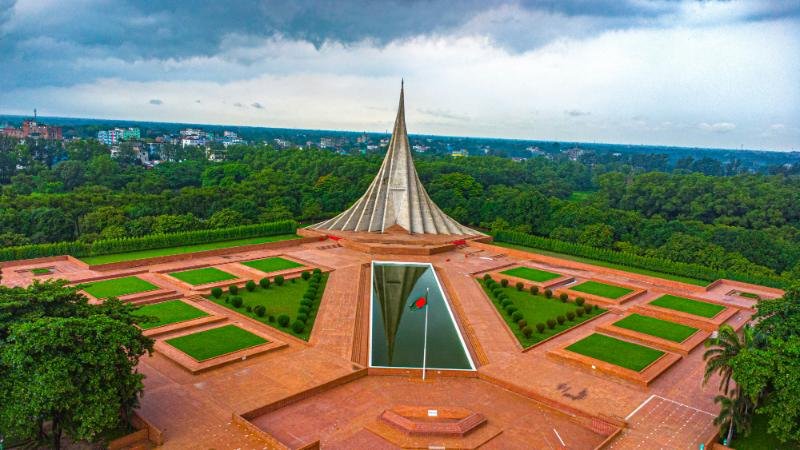
Bangladesh
Bangladesh is a densely populated South Asian nation of over 170 million people, known for its lush, riverine landscape, vibrant culture, and rapidly developing economy. Founded in 1971, it is a parliamentary democracy with Dhaka as its capital. It is a major global exporter of textiles and garments.
Key Aspects of Bangladesh:
Geography: Located on the Bay of Bengal and surrounded by India (with a small border with Myanmar), the country consists mostly of a low-lying alluvial plain created by the Ganges and Brahmaputra rivers. It is highly prone to floods and cyclones during the monsoon season.
Population & Culture: It is one of the most densely populated countries in the world. The official language is Bengali, and the population is predominantly Muslim (over 90%).
Economy: A lower-middle-income country with a growing economy. Its primary industries are ready-made garments (RMG), jute, agriculture (rice, tea), and, increasingly, pharmaceuticals.
Landmarks: It is home to the Sundarbans, the world's largest mangrove forest, which is a UNESCO World Heritage site.
Development: In recent decades, Bangladesh has made significant progress in reducing poverty, improving literacy rates (now over 75%), and advancing health outcomes.